
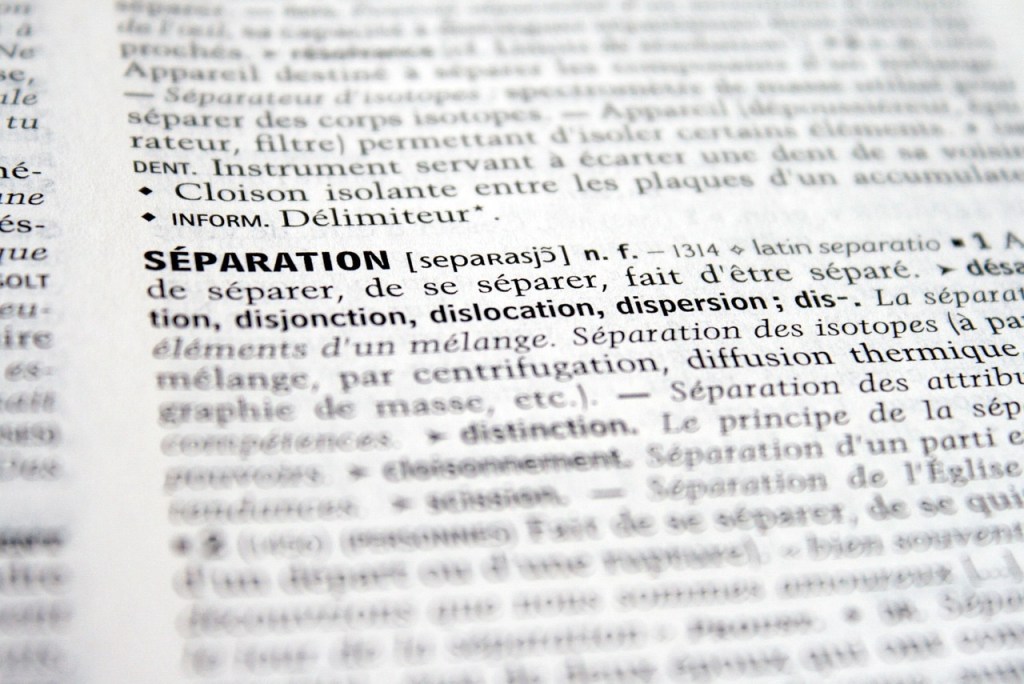
Professional jargon serves as both a bridge and a barrier in modern society. Within specialized fields like law, medicine, and technology, precise terminology enables clear communication among experts. A surgeon can describe exact procedures to colleagues, while lawyers can draft contracts with minimal ambiguity. Yet this same linguistic precision creates walls between professionals and the general public.
These specialized languages emerge from genuine needs within each field. Medical terminology, for instance, allows healthcare providers to communicate complex conditions accurately across linguistic and cultural boundaries. Programming languages provide unambiguous instructions to computers. Legal terms carry specific meanings refined through centuries of jurisprudence.
However, the mastery of these specialized languages often requires years of training and substantial financial resources. This requirement transforms professional terminology from a mere communication tool into a mechanism of social control. Those who master these languages gain access to privileged positions, while others remain outside looking in.
The Economics of Linguistic Gatekeeping
The relationship between specialized language and economic power becomes particularly clear in the legal profession. When legal documents remain impenetrable to the average person, lawyers become essential interpreters. Their expertise in decoding complex terminology and constructions maintains their professional status and economic value.
This dynamic creates a potential conflict of interest. While simplifying legal language might benefit society overall, it could threaten the economic interests of those who profit from its complexity. The same pattern appears in other fields, where experts serve as paid intermediaries between specialized knowledge and the general public.
The cost of acquiring these linguistic skills adds another economic dimension. Professional education often requires significant investment, limiting access to those with financial means. This creates a self-perpetuating cycle where economic privilege enables language acquisition, which in turn maintains economic advantage.
English as a Global Gatekeeper
The role of English in global commerce and academia presents a parallel case of linguistic gatekeeping on an international scale. In many non-English-speaking countries, English proficiency functions as a ticket to professional advancement and intellectual participation. This creates multiple layers of inequality, separating not only English speakers from non-speakers but also those who can afford quality language education from those who cannot.
Even among English speakers, social distinctions emerge through different varieties of the language. Academic English differs markedly from everyday speech, creating another barrier between professional and public discourse. This linguistic hierarchy reflects and reinforces existing social structures, with “proper” English serving as a marker of education and class.
The global dominance of English in professional and academic contexts poses particular challenges for talented individuals from non-English-speaking backgrounds. Their contributions to global knowledge and commerce often depend on their ability to master not just basic English, but its specialized professional and academic forms.
Technology and the Promise of Democratization
Artificial intelligence emerges as a potential equalizer in this linguistic landscape. AI-powered tools can translate not only between natural languages but also between specialized professional languages and everyday speech. This technological bridge might reduce dependence on traditional gatekeepers and make specialized knowledge more accessible to the general public.
However, the democratizing potential of technology has shown limitations in practice. The internet, despite providing unprecedented access to information, has not automatically led to broader intellectual engagement. Instead, many users remain within comfortable echo chambers, engaging primarily in casual communication within their existing social groups.
The ease of access to information through technology might also bypass important aspects of learning and cognitive development. The process of mastering specialized languages, though challenging, helps develop particular ways of thinking and understanding within professional fields. Quick translations or simplifications might miss these deeper benefits.
The Value of Intellectual Labor
The effort required to master specialized languages serves purposes beyond mere gatekeeping. The process of learning these languages trains the mind in particular ways of thinking and analysis. A lawyer’s struggle with legal terminology develops specific analytical skills, just as a scientist’s command of technical language reflects deep understanding of scientific concepts.
This suggests that completely eliminating linguistic barriers might have unintended consequences. While unnecessary complexity should be reduced, some complexity reflects the genuine intricacy of professional knowledge and thought. The challenge lies in distinguishing between artificial barriers and necessary precision.
The tendency to romanticize alternative forms of knowledge, such as folk wisdom, sometimes leads to oversimplified views of this issue. While traditional and informal knowledge systems hold real value, not all knowledge forms serve all purposes equally well. Professional languages developed in response to specific needs that casual or traditional language sometimes cannot address.
Finding Balance in a Complex Future
The solution to linguistic gatekeeping requires careful balance. Professional fields must maintain necessary precision while eliminating arbitrary barriers. This might mean developing multiple layers of communication – precise professional terminology for internal use, alongside clearer translations for public consumption.
AI and other technologies can support this balance by providing bridges between different linguistic levels. However, these tools should complement rather than replace the development of human understanding. The goal should be making knowledge more accessible while preserving the benefits of deep engagement with specialized ways of thinking.
The future of professional language likely involves more fluid boundaries between expert and public discourse. Yet this evolution must preserve the valuable aspects of specialized communication while eliminating unnecessary barriers. Success requires recognizing both the power dynamics embedded in professional languages and their genuine contribution to human knowledge and capability.
Image by CQF-avocat
 Tom’s Blog