
As my wife and I arrived in Luzern at the start of our two-week adventure through Switzerland, we were immediately captivated by the serene beauty of the city nestled between the majestic Alps and the tranquil waters of Lake Luzern. The crisp September air carried a hint of autumn, and the historic charm of the old town beckoned us to explore its cobblestone streets and medieval architecture.
Our journey was more than a sightseeing tour; it was an exploration of the rich and complex interplay of religion, language, and history that defines Switzerland. Coming from different religious backgrounds—my wife being Catholic and myself raised in the Protestant (Presbyterian) faith—we were intrigued by how these traditions coexist in this diverse nation. Our life in the predominantly Catholic Philippines had already given us a unique perspective on religious harmony and division, further fueling our curiosity.
As we wandered through the cities of Luzern, Geneva, and Bern, we encountered a fascinating blend of cultures and faiths. The country’s multilingual nature—encompassing German, French, Italian, and Romansh—mirrored the religious diversity we observed. This journey allowed us to reflect on how Switzerland’s historical decisions and policies have shaped a society that values neutrality, stability, and unity amid diversity.
Luzern: A City Where Faith and Language Intersect

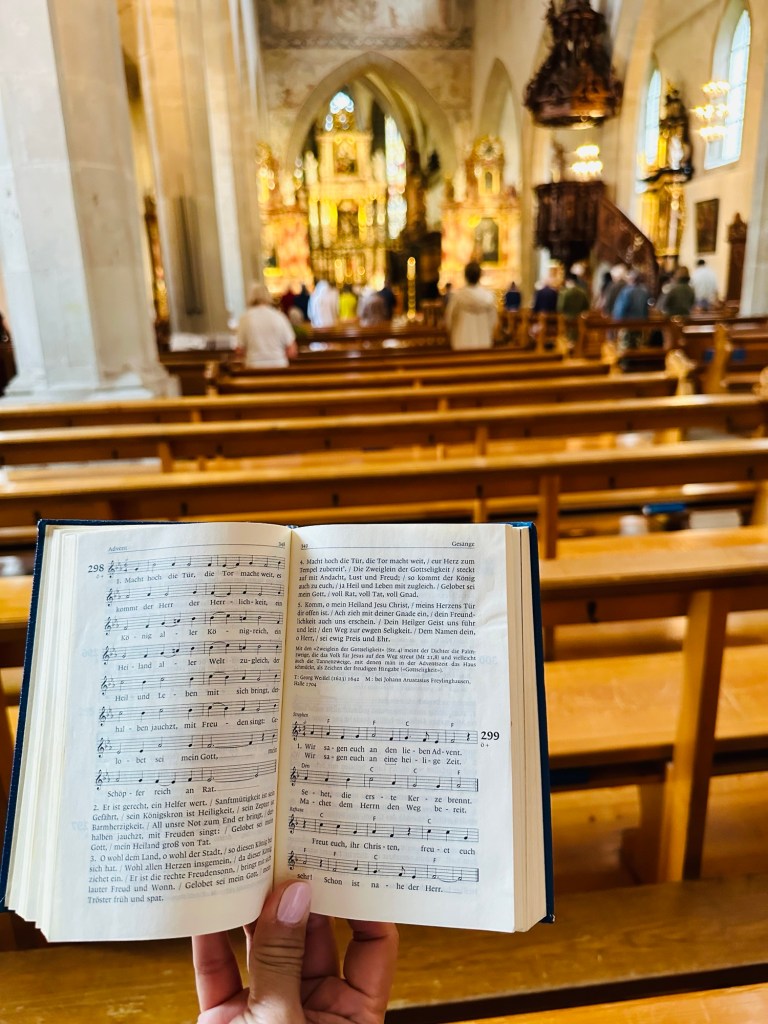
Our time in Luzern was marked by visits to stunning churches that highlighted the city’s Catholic heritage. Attending Mass at Franziskanerkirche (the Franciscan Church) was a profound experience. The church’s warm ambiance, intricate frescoes, and the resonant sound of hymns sung in German created an atmosphere of reverence and peace.
We also visited the Church of St. Leodegar, whose twin spires are a defining feature of Luzern’s skyline. The grandeur of its Baroque architecture and the elaborate interior decorations were characteristic of Catholic churches. What struck us was that despite Luzern being in the German-speaking part of Switzerland, which we might have associated with Protestantism due to historical links with Germany, Catholicism was deeply rooted here.
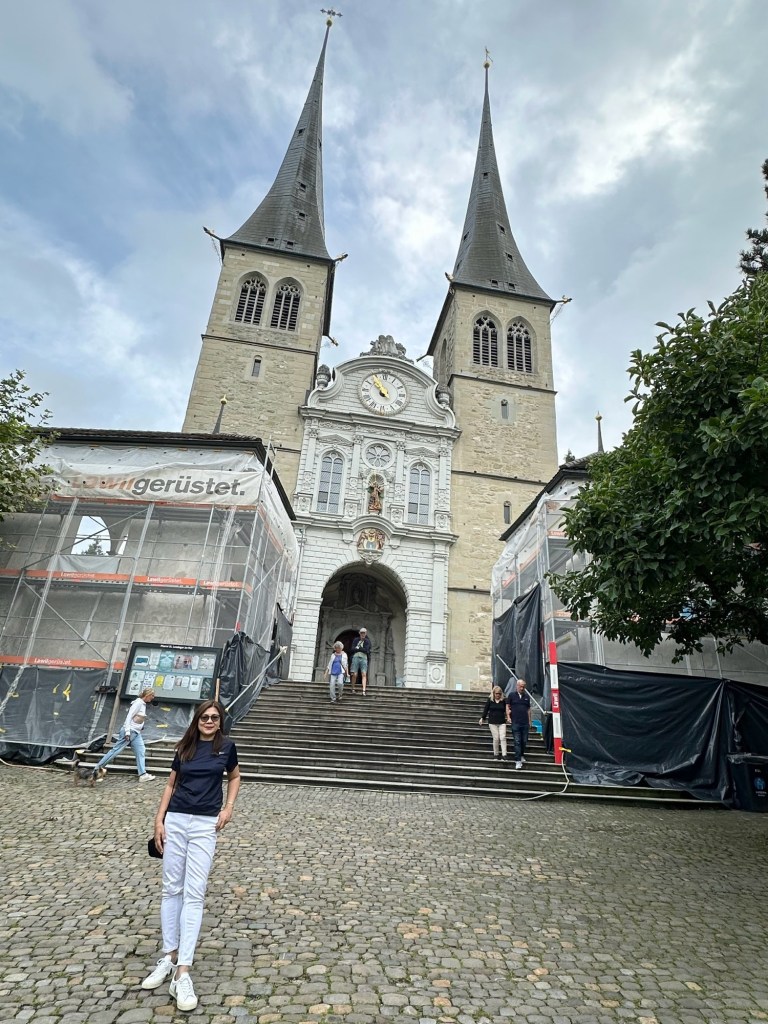
This observation challenged our assumptions about the correlation between language and religion. Luzern demonstrated that linguistic and religious identities in Switzerland are not strictly aligned, adding layers of complexity to the nation’s cultural landscape.
Geneva: Tracing the Footsteps of the Reformation
Leaving Luzern, we traveled to Geneva, a city steeped in the history of the Protestant Reformation. As we walked along the shores of Lake Geneva, the Jet d’Eau spraying its plume high into the sky, we felt the weight of history surrounding us. The French language filled the air, and the city’s cosmopolitan vibe contrasted with the quaint charm of Luzern.

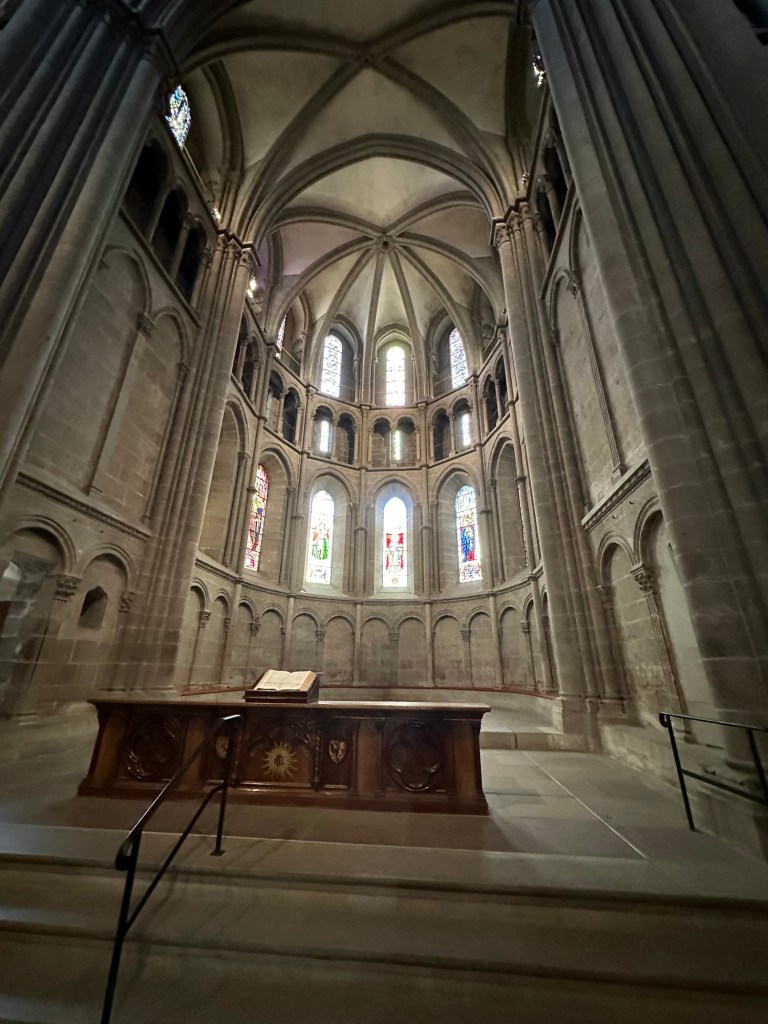
Our visit to St. Pierre Cathedral was particularly significant. The cathedral, with its imposing Gothic architecture, had once been a Catholic church but became a center for Protestant worship under the influence of John Calvin. Inside, the simplicity of the interior was notable—a single Bible rested on the altar, embodying the Protestant emphasis on scripture.

This melding of Catholic architectural grandeur with Protestant simplicity was a powerful symbol of Geneva’s religious journey. The city’s role in the Reformation, particularly Calvin’s leadership, had a profound impact not only on Switzerland but also on Protestantism worldwide. It was fascinating to see how a French-speaking city embraced Protestantism so fully, further illustrating the nuanced relationship between language and faith in Switzerland.
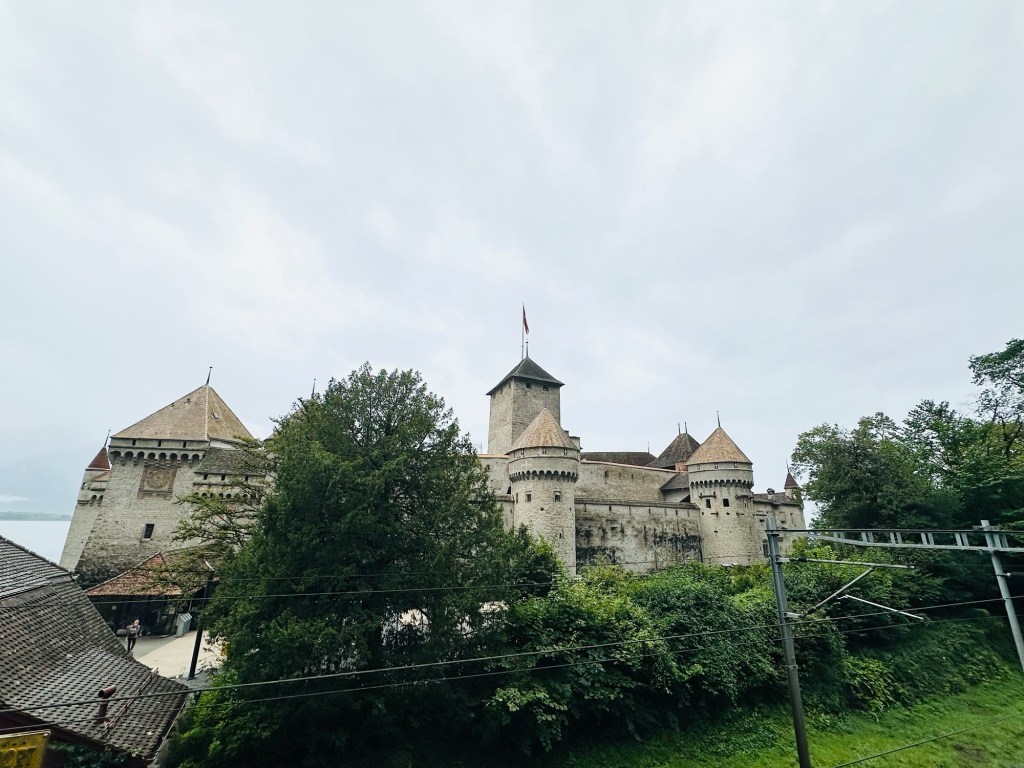
We also learned about François Bonivard, a Catholic monk who supported Geneva’s independence. His imprisonment in Chillon Castle and subsequent liberation inspired Lord Byron’s poem “The Prisoner of Chillon.” Bonivard’s story added another layer to our understanding of the complex interplay between religion, politics, and personal conviction in Swiss history.

Bern: A Harmonious Blend of Traditions
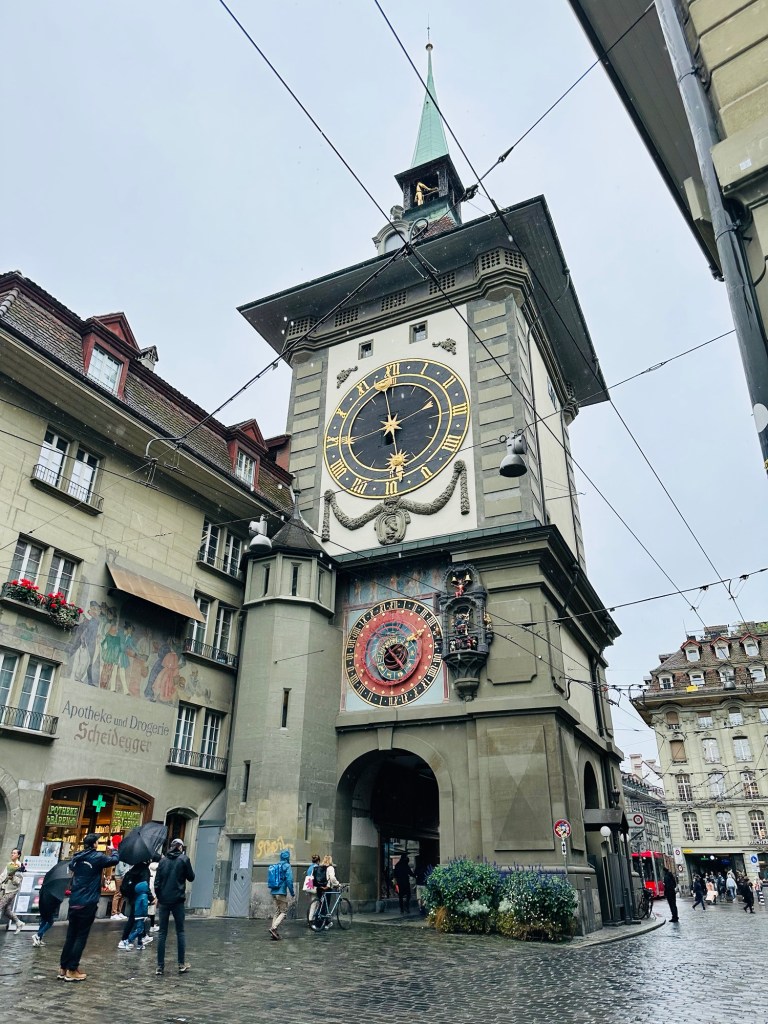
Another stop was Bern, the nation’s capital. The city’s well-preserved medieval center, with its arcaded streets and iconic Zytglogge clock tower, offered a window into Switzerland’s past. Here, we visited the Bern Minster, a cathedral that stands as the tallest in Switzerland.
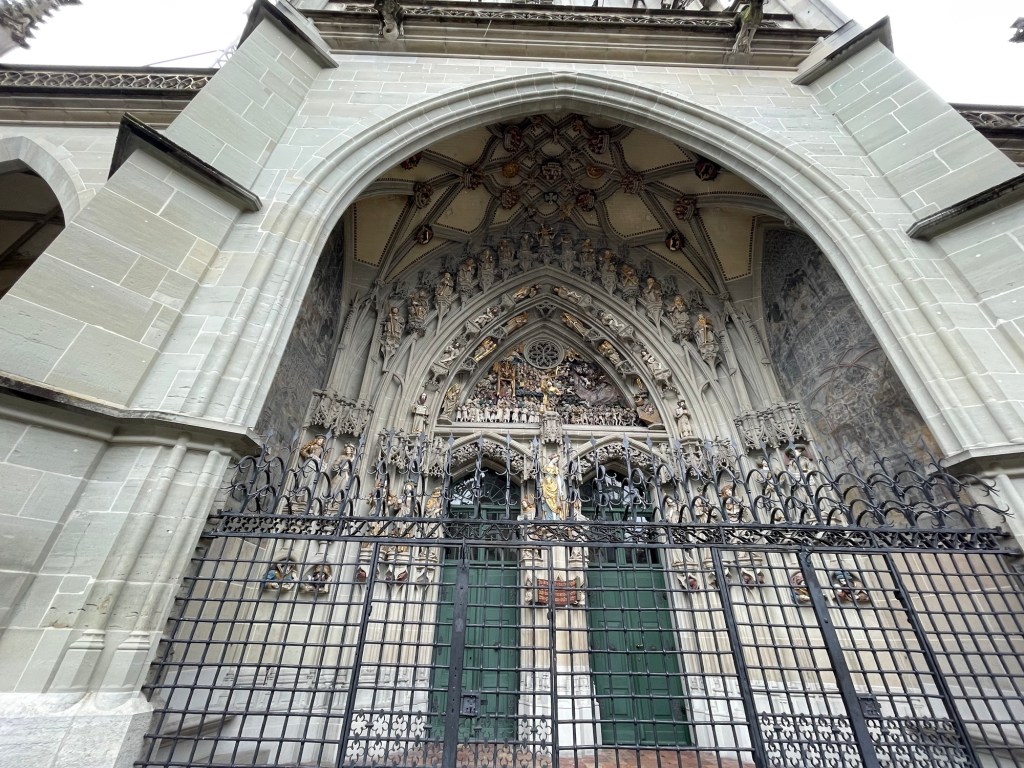
The Bern Minster was particularly intriguing. Despite being a Protestant church, its elaborate Gothic architecture rivaled that of any grand Catholic cathedral. The intricate carvings, soaring spires, and stunning stained-glass windows showcased a level of artistry and ornamentation that we had come to associate with Catholic churches. This blend of Protestant faith and Catholic architectural style was another example of how Switzerland’s religious history is interwoven in unexpected ways.

Walking through the cathedral, we reflected on how Bern, like Luzern and Geneva, embodies the coexistence of different religious traditions. The city’s German-speaking population and Protestant heritage added another dimension to our exploration of how language and faith interact in Switzerland.
Reflections on Neutrality and Unity
Throughout our journey, we were struck by how Switzerland has managed to cultivate a sense of unity amidst its diversity. The country’s policy of neutrality, famous in international relations, seems to extend to its internal approach to language and religion. By embracing multiple languages and faiths, Switzerland has fostered a society that values balance and mutual respect.
Historically, the country has avoided the devastating conflicts that have plagued its neighbors by maintaining neutrality and focusing on internal cohesion. The cantonal system grants significant autonomy to regions, allowing them to preserve their unique cultural and religious identities while contributing to the nation’s overall stability.
In today’s globalized world, Switzerland faces new challenges with immigration and the rise of secularism. The influx of people from various backgrounds introduces additional layers of diversity. Yet, the country’s foundational values provide a framework for integrating these new influences while maintaining social harmony.
Lessons from Switzerland’s Diversity
Our experiences in Switzerland offered valuable insights into how societies can navigate diversity without sacrificing unity. The nation’s ability to balance different languages and religions within a cohesive framework is a testament to the effectiveness of policies that promote inclusion and respect.
For us, the journey underscored the importance of approaching differences with openness and curiosity. Witnessing how Switzerland harmonizes its multifaceted identity inspired us to reflect on our own contexts. Whether in the Philippines, where various cultural influences converge, or in other multicultural societies, there are lessons to be learned from this approach.
It suggests that neutrality, rooted in respect and a commitment to shared values, can be a powerful means of fostering peace and prosperity. It encourages us to consider how we might apply these principles to bridge divides and build more inclusive communities.
Embracing Complexity and Harmony
As our two weeks in Switzerland came to an end, we felt a deep appreciation for the country’s rich history and cultural diversity. The majestic landscapes provided a stunning backdrop to a journey that was as much about personal reflection as it was about exploring new places.
Our travels reinforced the idea that complexity does not have to lead to division. Instead, when approached with intentionality and respect, diversity can enhance the fabric of society. Switzerland’s example shows that it is possible to create a harmonious community where different traditions not only coexist but also enrich one another.
Returning home, we carry with us memories of breathtaking scenery and the resonant sounds of church bells. More importantly, we hold onto the insights gained from a nation that, amidst its complexities, has found a way to embrace diversity and foster unity.
 Tom’s Blog