
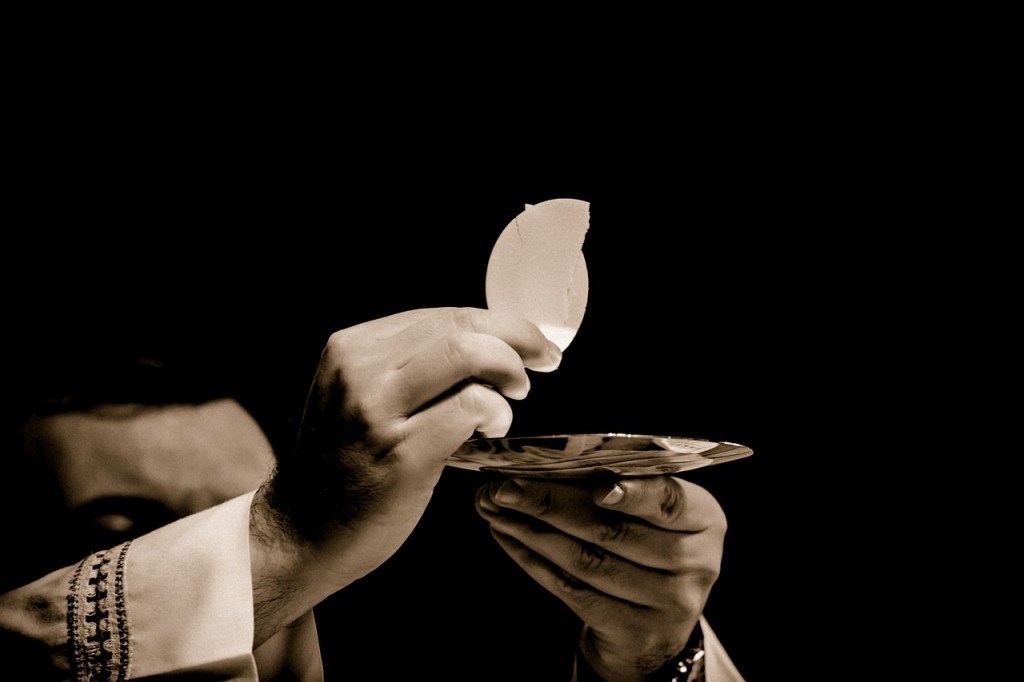
The Solemnity of the Most Holy Body and Blood of Christ, commonly known as Corpus Christi, is a significant feast in the Catholic liturgical calendar. This day is dedicated to celebrating the real presence of Jesus Christ in the Eucharist, a mystery that lies at the heart of Catholic faith and worship.
The Eucharist, also known as Holy Communion, is a sacrament that not only commemorates the Last Supper but also serves as a profound expression of Christ’s love and sacrifice. Catholics believe that during the Mass, the bread and wine become the actual body and blood of Christ, a process known as transubstantiation.
Let’s reflect on the importance of Corpus Christi, the theological and biblical foundations of the Eucharist, and how this sacred tradition is viewed across different Christian denominations. Through this exploration, we aim to highlight both the unique aspects of the Eucharist in various traditions and the common ground that fosters unity among Christians.
The Significance of Corpus Christi
Corpus Christi, which translates to “Body of Christ” in Latin, is a feast that has been celebrated in the Catholic Church since the 13th century. Instituted by Pope Urban IV in 1264 through the papal bull “Transiturus de hoc mundo,” Corpus Christi was established to honor the Eucharist and to provide a specific day for its veneration outside of the context of Holy Week. The feast is traditionally celebrated on the Thursday after Trinity Sunday, though in many places, it is observed on the following Sunday to allow greater participation from the faithful.
The theological importance of Corpus Christi in the Catholic Church is profound. It underscores the belief in the real presence of Christ in the Eucharist, a central tenet of Catholic faith. The doctrine of transubstantiation holds that during the Mass, the bread and wine offered in the Eucharist become the actual body and blood of Jesus Christ, while retaining the appearances of bread and wine. This belief is rooted in the words of Jesus at the Last Supper, as recorded in the Gospels, where He took bread and wine, blessed them, and declared them to be His body and blood.
Corpus Christi serves not only as a day of profound theological reflection but also as a public demonstration of faith. Traditional processions, where the consecrated host is carried through the streets in a monstrance, are a common way for communities to publicly proclaim their belief in the real presence of Christ in the Eucharist. These processions symbolize the journey of the faithful through life, guided and sustained by the presence of Christ.
Furthermore, the feast of Corpus Christi emphasizes the communal aspect of the Eucharist. It is a reminder that the Eucharist is a sacrament of unity, bringing together the faithful as one body in Christ. This unity is not limited to those present at Mass but extends to the entire Church, both the living and the deceased, across time and space.
Corpus Christi is a feast of deep significance in the Catholic tradition, highlighting the centrality of the Eucharist in the life of the Church. It reaffirms the belief in the real presence of Christ, celebrates the unity of the faithful, and provides an opportunity for public witness to this profound mystery of faith.
Biblical Foundations
The Eucharist, celebrated during Corpus Christi, has its foundations deeply rooted in Scripture. The primary scriptural basis for the Eucharist comes from the accounts of the Last Supper, particularly in the Synoptic Gospels (Matthew, Mark, and Luke) and in Paul’s First Letter to the Corinthians.
In the Gospel of Mark, Jesus institutes the Eucharist during the Passover meal with His disciples. Mark 14:22-24 provides a detailed account of this significant moment:
And as they did eat, Jesus took bread, and blessed, and brake it, and gave to them, and said, Take, eat: this is my body. And he took the cup, and when he had given thanks, he gave it to them: and they all drank of it. And he said unto them, This is my blood of the new testament, which is shed for many.
These words form the cornerstone of the Christian belief in the real presence of Christ in the Eucharist.
The Gospel accounts highlight the dual elements of the Eucharist: bread and wine, which Jesus identifies as His body and blood. This identification signifies a new covenant, echoing the covenantal language found throughout the Hebrew Scriptures. The act of breaking bread and sharing the cup during the Last Supper signifies not only Jesus’ impending sacrifice but also the ongoing nourishment and unity provided to believers through the Eucharist.
In addition to the Gospel accounts, Paul’s First Letter to the Corinthians (1 Corinthians 11:23-26) reinforces the importance of the Eucharist. Paul recounts the tradition he received directly:
For I have received of the Lord that which also I delivered unto you, That the Lord Jesus the same night in which he was betrayed took bread: And when he had given thanks, he brake it, and said, Take, eat: this is my body, which is broken for you: this do in remembrance of me. After the same manner also he took the cup, when he had supped, saying, This cup is the new testament in my blood: this do ye, as oft as ye drink it, in remembrance of me.
Paul’s reiteration underscores the significance of the Eucharist as a continual act of remembrance and proclamation of the Lord’s death until He comes again.
These scriptural foundations emphasize the Eucharist’s role as a sacrament of remembrance, unity, and grace. By participating in the Eucharist, Christians join in a profound tradition that links them to the earliest followers of Jesus and to the pivotal moment of the Last Supper. The biblical texts affirm the transformative power of the Eucharist, inviting believers to partake in the life and sacrifice of Christ.
Ecumenical Perspectives
The Eucharist, while universally acknowledged as a significant practice among Christian traditions, is understood and celebrated in various ways across different denominations. The differing theological interpretations and liturgical practices reflect the rich diversity within Christianity, yet also highlight areas of common ground that foster ecumenical dialogue.
In the Catholic Church, the Eucharist is considered the “source and summit of the Christian life.” The doctrine of transubstantiation asserts that the bread and wine become the actual body and blood of Christ during the Mass. This belief is grounded in the scriptural accounts of the Last Supper and has been a defining feature of Catholic theology and practice for centuries. The real presence of Christ in the Eucharist is a central tenet that underscores the deep reverence and centrality of this sacrament in Catholic worship.
Similarly, the Eastern Orthodox Church holds a profound belief in the real presence of Christ in the Eucharist, though it does not use the term “transubstantiation.” The Orthodox emphasis is on the mystery of the sacrament, celebrated with a deep sense of reverence and solemnity. The Divine Liturgy, which includes the Eucharist, is the primary act of worship, and participation in it is essential for the spiritual life of the faithful. The Orthodox Church sees the Eucharist as a means of receiving divine grace and being united with Christ.
The Protestant Reformation brought significant changes to the understanding of the Eucharist, leading to a variety of interpretations among Protestant denominations. Martin Luther, for instance, retained the belief in the real presence of Christ in the Eucharist but rejected the Catholic doctrine of transubstantiation. Instead, he proposed consubstantiation, where Christ’s body and blood are present “in, with, and under” the forms of bread and wine. This view affirms a real presence but distinguishes itself from the Catholic understanding.
John Calvin and other Reformed theologians believed in a “real spiritual presence” of Christ in the Eucharist. They emphasized that believers are spiritually nourished by Christ through the Holy Spirit during Communion, rejecting the notion of a physical change in the elements. The Anglican Church encompasses a range of views on the Eucharist, with some Anglicans holding beliefs closer to Catholicism and others more aligned with Reformed theology. The Book of Common Prayer includes the Eucharist as a central act of worship, and many Anglicans believe in a real, though not necessarily physical, presence of Christ in the sacrament.
Many Baptists and Evangelicals view the Lord’s Supper primarily as a memorial of Christ’s death. They generally reject the idea of Christ’s physical or real presence in the elements, emphasizing instead the symbolic nature of the bread and wine. Despite these theological differences, there are significant areas of common ground among Christian traditions regarding the Eucharist.
All Christian traditions that celebrate the Eucharist do so in remembrance of Jesus Christ’s sacrifice. The Eucharist is a means of recalling and honoring the Last Supper and Christ’s atoning death on the cross. The Eucharist is also a powerful symbol of the unity of believers. In all traditions, it serves to bring the community together in worship and fellowship, reinforcing the communal aspect of Christian faith. While the understanding of Christ’s presence in the Eucharist varies, all traditions agree that it is a source of spiritual nourishment and strength for believers.
The modern ecumenical movement has made significant strides in fostering dialogue and understanding between different Christian traditions regarding the Eucharist. Organizations like the World Council of Churches (WCC) and various bilateral dialogues between denominations have worked to find common ground and mutual respect. These efforts have led to greater appreciation of the theological diversity within Christianity and have paved the way for joint worship services and shared liturgical practices.
While theological differences regarding the Eucharist persist, the shared emphasis on remembrance, unity, and spiritual nourishment provides a strong foundation for ecumenical dialogue and mutual respect among Christian denominations.
Unity and Diversity in Eucharistic Theology
The Eucharist holds a unique place within Christian theology and practice, reflecting both the unity of the faith and the diversity of its expressions. This dual nature of the Eucharist is central to understanding how different Christian traditions approach this sacrament, and it offers a rich area for ecumenical dialogue and mutual enrichment.
At the heart of the Eucharistic celebration across Christian denominations is the shared belief in its profound significance. Whether viewed as the literal body and blood of Christ, as in Catholic and Orthodox traditions, or as a powerful symbol and memorial, as in many Protestant traditions, the Eucharist is universally recognized as a central act of Christian worship. This common ground emphasizes the fundamental unity of Christians in their desire to remember and honor the sacrifice of Jesus Christ.
The diversity in Eucharistic theology, however, stems from various theological interpretations and historical developments. The Catholic Church’s doctrine of transubstantiation, which posits that the substance of bread and wine is transformed into the actual body and blood of Christ, highlights the mystery and sanctity of the sacrament. This belief is deeply embedded in Catholic worship and is celebrated with great reverence during Mass.
In contrast, the Eastern Orthodox Church emphasizes the mystical and sacramental nature of the Eucharist without defining the process of change as precisely as transubstantiation. The focus is on the transformative power of the Holy Spirit and the sacred mystery of Christ’s presence. The Divine Liturgy, which culminates in the Eucharist, is a profound expression of faith and communion with the divine.
Protestant traditions present a range of interpretations, reflecting the theological pluralism that emerged from the Reformation. Martin Luther’s concept of consubstantiation, for example, asserts that Christ’s body and blood coexist with the bread and wine. This view maintains a belief in the real presence while differing from the Catholic understanding of transubstantiation. John Calvin’s perspective, on the other hand, emphasizes a real spiritual presence, where Christ is present in a spiritual but not physical form, nourishing the faithful through the Holy Spirit.
The Anglican tradition encompasses a spectrum of beliefs, with some adherents leaning towards a more Catholic understanding and others aligning with Reformed theology. The Book of Common Prayer, a central text in Anglican worship, reflects this breadth by allowing for varied interpretations of the Eucharist.
Baptist and Evangelical traditions typically view the Eucharist as a symbolic act of remembrance, commemorating Christ’s sacrifice without asserting a physical or real presence in the elements. This perspective underscores the memorial nature of the Lord’s Supper and its role in fostering a personal and communal connection to Jesus’ teachings and sacrifice.
Despite these theological differences, the Eucharist serves as a powerful symbol of Christian unity. Ecumenical efforts have made significant strides in fostering dialogue and understanding among different denominations. Joint declarations, such as those between Lutherans and Catholics, and interdenominational gatherings have highlighted the shared reverence for the Eucharist and the common goal of unity in Christ.
In practice, many ecumenical initiatives emphasize the importance of shared worship experiences and mutual respect. These efforts recognize that, while theological interpretations may differ, the underlying faith and devotion to Christ’s teachings remain a unifying force. Ecumenical dialogues continue to explore ways to bridge theological gaps, focusing on the shared aspects of the Eucharist that can bring Christians closer together.
The Eucharist embodies both the unity and diversity of Christian theology. It is a sacrament that transcends denominational boundaries, offering a profound connection to the divine and to one another. By embracing both the common ground and the unique perspectives within Eucharistic theology, Christians can work towards greater unity and understanding, fostering a spirit of mutual respect and shared faith.
Practical Implications for Christians Today
The Eucharist, with its deep theological and spiritual significance, has profound practical implications for the daily lives of Christians. Its celebration is not just a ritual confined to church walls but a transformative experience that shapes the beliefs, behaviors, and communal life of believers.
Shaping Christian Life and Worship: The Eucharist serves as a powerful reminder of Christ’s sacrifice and love, prompting Christians to live out these values in their daily interactions. By partaking in the Eucharist, believers are called to embody the self-giving love of Christ, fostering a spirit of humility, service, and compassion in their communities. The act of receiving the Eucharist encourages Christians to reflect on their own lives, seek forgiveness, and strive for moral and spiritual growth.
In worship, the Eucharist acts as a focal point that brings the community together. The communal aspect of the Eucharist underscores the importance of unity and fellowship among believers. By gathering to celebrate the Eucharist, Christians affirm their shared faith and commitment to supporting one another. This sense of community extends beyond the church, influencing how Christians interact with the broader society, promoting peace, justice, and reconciliation.
Examples of Ecumenical Efforts and Shared Worship Practices: Ecumenical efforts have increasingly emphasized the importance of shared worship experiences, recognizing the Eucharist as a bridge between different Christian traditions. Joint services, where members of various denominations come together to celebrate the Eucharist, exemplify the spirit of unity and mutual respect. These services often highlight the shared elements of faith, such as the remembrance of Christ’s sacrifice and the call to live out his teachings, while acknowledging theological differences.
Programs and initiatives, like those organized by the World Council of Churches, provide platforms for Christians from diverse backgrounds to engage in dialogue and collaborate on social and humanitarian projects. These initiatives often include joint Eucharistic celebrations, fostering a sense of solidarity and shared mission. By participating in these ecumenical activities, Christians can deepen their understanding of each other’s traditions and work towards common goals, such as combating poverty, advocating for human rights, and promoting environmental stewardship.
Encouragement for Mutual Respect and Understanding: The diversity of Eucharistic theology and practice among Christian denominations offers an opportunity for mutual learning and enrichment. By engaging in respectful dialogue, Christians can gain a deeper appreciation of the different ways the Eucharist is understood and celebrated. This exchange of perspectives can enhance the spiritual life of individuals and communities, promoting a more inclusive and comprehensive understanding of Christian faith.
Practicing mutual respect and understanding involves acknowledging the validity of different theological interpretations and the historical and cultural contexts that shape them. It means celebrating the common ground that unites Christians while also valuing the unique contributions of each tradition. By doing so, Christians can build stronger relationships and foster a spirit of unity that transcends doctrinal differences.
The Eucharist has far-reaching implications for how Christians live their faith in everyday life. It calls for a commitment to embodying Christ’s love and sacrifice, both within the church and in the broader world. Ecumenical efforts and shared worship practices highlight the potential for the Eucharist to unite Christians across denominational lines, promoting a spirit of mutual respect and collaboration. Through these practices, Christians can work together to address the challenges of the modern world, guided by the enduring principles of faith, hope, and love.
Corpus Christi: The Eucharist Across Traditions
In exploring the profound significance of Corpus Christi, we have reflected on the rich theological and biblical foundations of the Eucharist, understanding it as a central act of worship and a profound expression of Christ’s love and sacrifice. This feast, which celebrates the real presence of Jesus in the Eucharist, empathizes the unity and transformation that this sacrament brings to the lives of believers.
The Eucharist is a sacrament that transcends denominational boundaries, offering a common ground for Christians of various traditions to unite in faith. While theological interpretations differ—ranging from the Catholic doctrine of transubstantiation to the symbolic understanding in many Protestant traditions—the underlying desire to honor Christ’s sacrifice and live out his teachings is a shared commitment among all Christians.
Ecumenical dialogue and shared worship practices have shown that despite differences, Christians can come together to celebrate the Eucharist, fostering mutual respect and understanding. These efforts highlight the potential for the Eucharist to be a bridge that brings Christians closer, promoting a spirit of unity and collaboration.
As we reflect on the practical implications of the Eucharist in our daily lives, we are reminded of its call to embody Christ’s love, compassion, and service. The communal aspect of the Eucharist strengthens our commitment to each other and to the broader mission of promoting peace, justice, and reconciliation in the world.
Corpus Christi is not just a celebration confined to the liturgical calendar but a living testament to the transformative power of the Eucharist. It invites us to deepen our communion with God and with each other, carrying the love of Christ into every aspect of our lives. Through ongoing ecumenical efforts and a shared commitment to the principles of faith, hope, and love, Christians can work together to address the challenges of the modern world, guided by the enduring light of the Eucharist.
Image by Robert Cheaib
 Tom’s Blog