
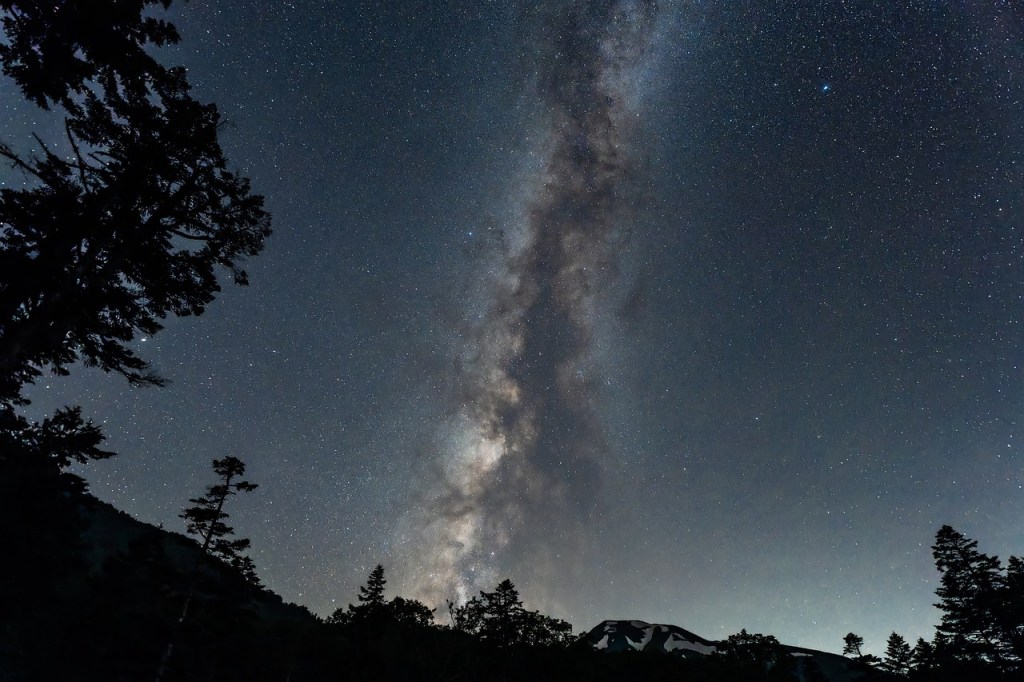
As human beings, we are innately curious creatures, driven to explore, discover, and understand the world around us. Yet, the more we learn, the more we realize the vastness of our ignorance. There are fundamental questions that have perplexed humanity for millennia, from the nature of consciousness to the origin of the universe. While we have made remarkable progress in fields like science and philosophy, we must also confront the possibility that some aspects of reality may lie permanently beyond the limits of human comprehension.
The concept that we can only understand what we are capable of understanding is a tautology – a statement that is inherently true by its circular reasoning. However, this simple idea has profound implications. It suggests that there may be aspects of reality that are fundamentally incomprehensible to the human mind, just as quantum physics would be to a chimpanzee.
This concept is often invoked in theological and philosophical discussions about the nature of God or the ultimate ground of being. If God is conceived as an infinite, eternal, omniscient, and omnipotent being, it follows that such a being would be inherently beyond the grasp of finite human understanding. We may glimpse aspects of the divine through revelation, mystical experience, or philosophical reasoning, but we can never fully comprehend the totality of God’s being.
The tautology of understanding also arises when considering the possibility of extraterrestrial intelligence. Given the immense size and age of the universe, many scientists argue that it is statistically likely that life, and perhaps even intelligent life, has emerged elsewhere. This idea is encapsulated in the Drake equation, which estimates the number of civilizations in our galaxy with which communication might be possible.
However, despite decades of searching, we have yet to detect any definitive signs of intelligent alien life. This apparent absence of evidence has come to be known as the Fermi paradox, named after physicist Enrico Fermi who famously asked, “Where is everybody?” If the universe is teeming with intelligent life, why have we not seen any evidence of it?
There are numerous potential explanations for the Fermi paradox. It could be that intelligent life is exceedingly rare, and that we are indeed alone in the universe. Alternatively, it may be that intelligent civilizations tend to destroy themselves before reaching a stage of interstellar communication or travel. However, there are also more intriguing possibilities to consider.
One resolution to the Fermi paradox is the idea that advanced alien civilizations may intentionally avoid contact with less developed cultures like our own. This idea, known as the zoo hypothesis, suggests that extraterrestrial intelligences may observe us from afar, but refrain from interfering in our development.
This concept is reminiscent of the “Prime Directive” in Star Trek, which prohibits Starfleet personnel from interfering with the internal development of alien civilizations, particularly those which are below a certain threshold of technological advancement. The rationale is that such interference, even if well-intentioned, could have disastrous consequences for the less advanced culture.
If the zoo hypothesis is correct, it would mean that we are not truly alone in the universe, but that the silence we perceive is a deliberate choice on the part of alien civilizations. They may be watching us, but they have decided not to make their presence known.
Another possibility is that extraterrestrial intelligences have already visited Earth, but that their presence has been kept secret. This is a common theme in many conspiracy theories and UFO believer communities. They argue that governments or shadowy organizations are concealing evidence of alien contact from the general public.
While such theories are often dismissed as baseless speculation, they do touch on an interesting philosophical question: how would we know if we had been contacted by an alien intelligence? Our perceptual and cognitive limits may mean that we could be in the presence of something extraordinary without even realizing it.
This leads us to perhaps the most profound and unsettling possibility: that alien intelligence may be so advanced that their presence or communications are simply undetectable or incomprehensible to us. Just as an ant cannot fathom the complexities of human civilization, our minds may be too limited to perceive or understand a truly transcendent alien intelligence.
This concept has parallels in the philosophy of mind and consciousness. Philosophers like Thomas Nagel have argued that there are likely forms of conscious experience that are fundamentally inaccessible to human cognition. He illustrates this with the thought experiment of a bat’s experience of echolocation – we can study the neurological and behavioral correlates of this sense, but we can never know what it is like to experience the world through sonar.
Similarly, a hyper-advanced alien mind may operate in ways that are utterly alien to human cognition. Their thoughts, perceptions, and forms of communication could be as incomprehensible to us as a symphony is to a beetle. In this scenario, the great silence of the cosmos is not a reflection of our solitude, but of our cognitive limitations.
Ultimately, the question of whether we are alone in the universe, and whether a higher intelligence is aware of us, remains unanswered. We can speculate, hypothesize, and search the skies for signs, but we must also confront the possibility that the truth may lie beyond the horizon of our understanding.
In this sense, the search for extraterrestrial intelligence is akin to humanity’s perennial quest for God or ultimate meaning. Both endeavors confront us with the vast mystery of existence and the limits of our own understanding. Both inspire a sense of awe, wonder, and intellectual humility.
Perhaps the greatest lesson we can draw from these cosmic questions is to remain open to the possibility of transcendent realities while recognizing the boundaries of our knowledge. As we continue to explore the universe and probe the depths of our own minds, we should do so with a spirit of curiosity tempered by humility.
In the end, the apparent silence of the cosmos may be a mirror reflecting our own limitations back to us. But rather than being a source of despair, this realization can be a wellspring of wonder and motivation. It reminds us that, for all our achievements and understanding, we are still newcomers in an ancient and mysterious universe, with so much yet to discover and ponder. And that, in itself, is a profound and beautiful truth.
Image by Kanenori
 Tom’s Blog