

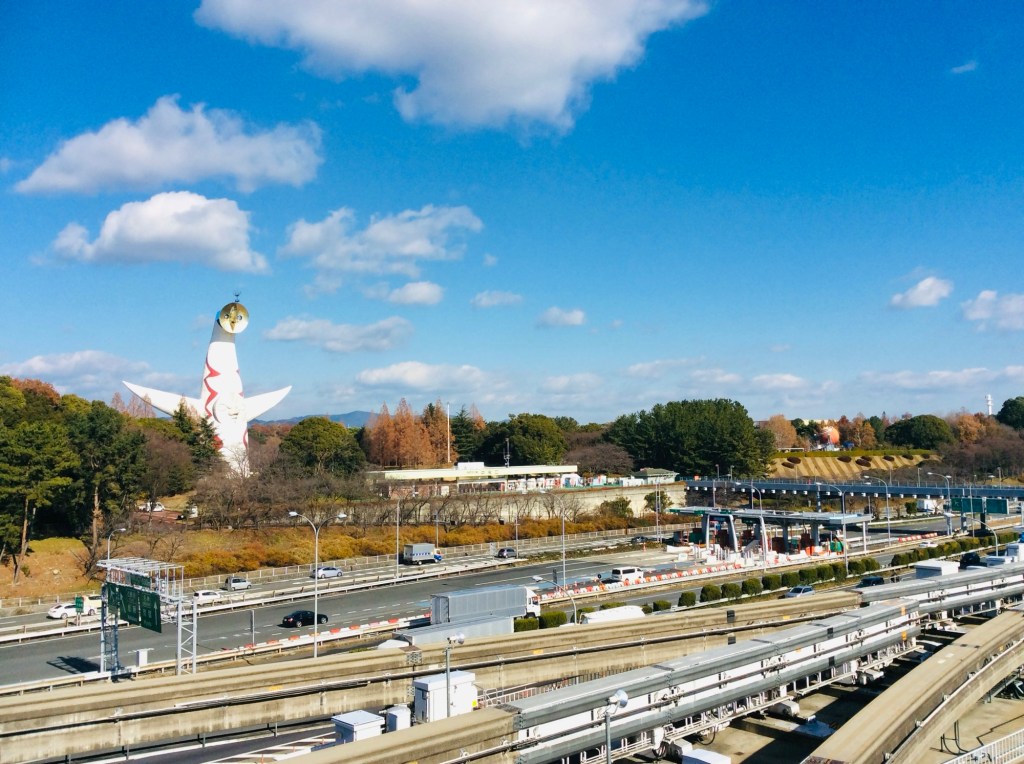
On the outskirts of Osaka, Japan, amidst a blend of urban sprawl and suburban tranquility, rises a monument of profound artistic and cultural importance: the Tower of the Sun. Conceived by the innovative avant-garde artist Taro Okamoto, this iconic structure first greeted the world at Expo ’70. It stands not in the bustling heart of the city, but rather in a space that bridges the metropolitan and the serene, symbolizing an era filled with optimism and futuristic hopes.
For me, the Tower holds a deeply personal resonance. As a student, my days were often graced by its looming presence, a constant companion during my part-time job at The National Museum of Ethnology, located nearby. Each visit to this architectural marvel was more than routine; it was an introspective journey. The Tower, with its compelling design and historical significance, offered a space for reflection. It connected me to a pivotal moment in history and served as a source of endless inspiration.
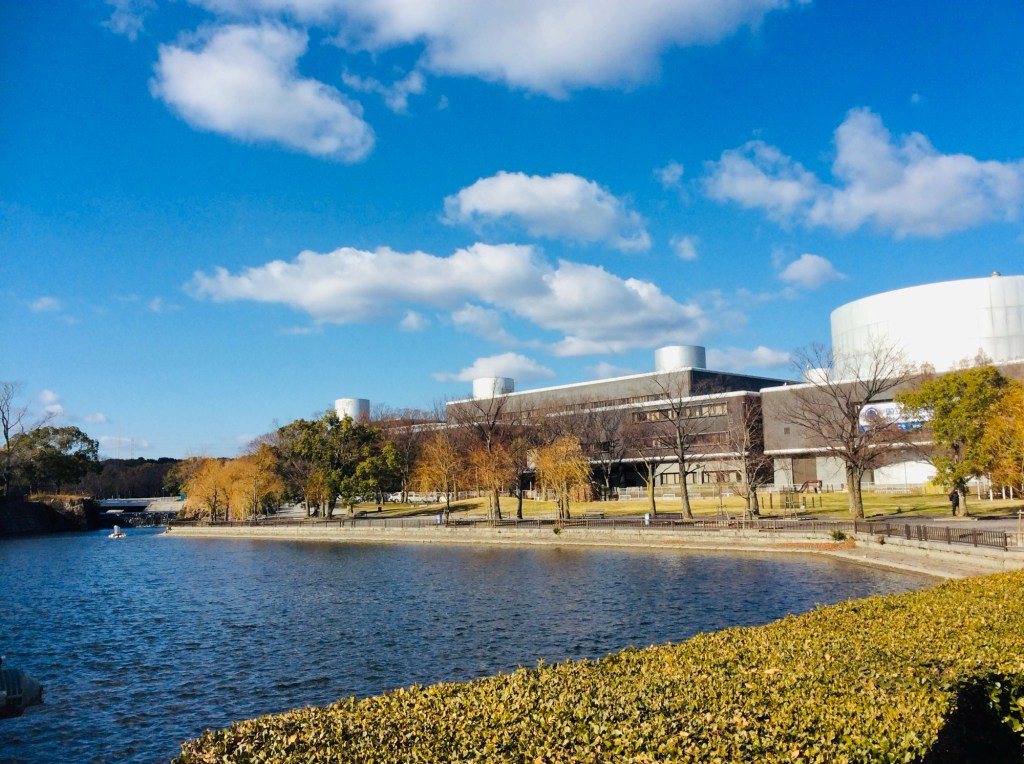
Historical Context and Symbolism
The Tower of the Sun emerged as a focal point of Expo ’70, a world’s fair held in Osaka under the grand theme of “Progress and Harmony for Mankind.” This event marked a pivotal moment in history, showcasing the zenith of technological optimism and international collaboration. Taro Okamoto, a visionary artist known for his bold and unorthodox style, conceptualized and brought to life this monumental artwork.
Central to the Tower’s design are three distinct faces, each symbolizing a different temporal aspect. The Face of the Sun, prominently placed at the center, is a representation of the present, characterized by its serene yet commanding expression that symbolizes the vitality and dynamic energy of life. Atop the Tower sits the Golden Mask, an abstract depiction of the future. Its enigmatic and slightly melancholic features suggest the unknown possibilities and the hopeful optimism of what lies ahead. On the lesser-seen back of the Tower is the Black Sun, a symbol of the past, reflecting on the history and the times that have shaped the present.
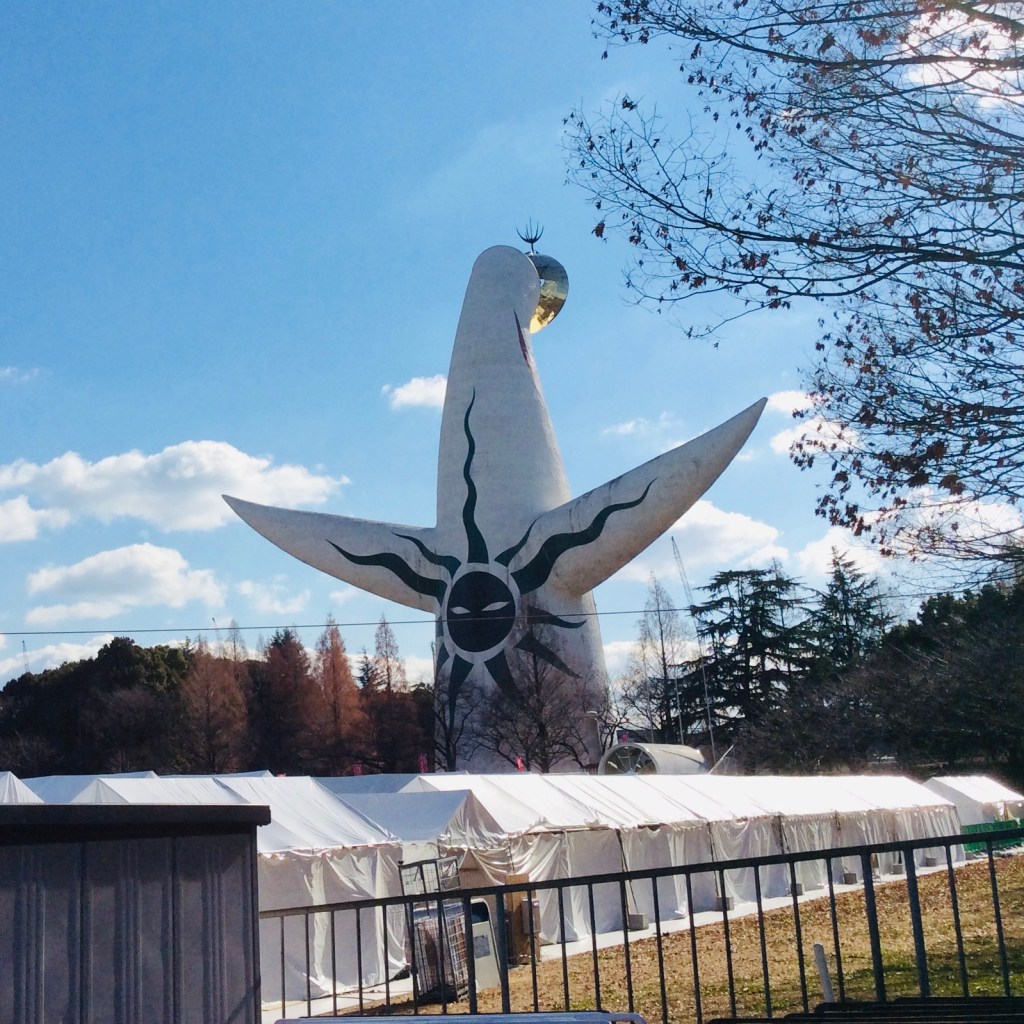
These faces are not just artistic expressions; they are philosophical musings on the nature of time. The Tower, in its entirety, serves as a bridge between the past, the present, and the future, inviting onlookers to ponder the continuous flow of human existence and the ever-changing tapestry of societal progression.
Retrofuturism
The Tower of the Sun, especially during its inception for Expo ’70, stands as a quintessential embodiment of retrofuturism, a blend of past artistic and futuristic technological aesthetics. This artistic movement captures the optimism and the forward-thinking spirit of its time, where the future was envisioned through the lens of technological utopianism.
However, as the decades rolled on, societal perceptions regarding technology and progress underwent significant transformations. The unbridled optimism of the 1970s, fueled by achievements like the Moon landing and other scientific breakthroughs, gradually shifted to a more cautious approach. This change was spurred by growing awareness of environmental challenges, ethical concerns in scientific advancements, and the realization that technology, while a powerful tool for progress, also brought with it unforeseen complications and responsibilities.
The Tower’s design, particularly the contemplative Golden Mask, seems to reflect this transition. What was once viewed as a beacon of an uncomplicated, promising future, over time, began to represent a more nuanced understanding. The Mask’s slightly downward gaze, possibly interpreted as a symbol of introspection, mirrors society’s evolving contemplation about the role and impact of technology in shaping our world.
In this light, the Tower transcends its original context, offering a space for reflection on not just the technological achievements, but also the associated responsibilities and ethical considerations that come with progress. It stands as a reminder that the path to the future is one of continuous dialogue, learning, and adaptation.
Dreams and Realities
The late 1960s and early 1970s, the epoch of Expo ’70, were heady days for space exploration, epitomized by the Apollo Moon landings. This era’s spirit was imbued with a vision of space travel that went beyond mere exploration, a vision brought vividly to life in the iconic film “2001: A Space Odyssey.” This movie, with its portrayal of space stations and lunar bases, encapsulated the era’s soaring aspirations and belief in a near-future where space was a new frontier for humanity.
One of the highlights of Expo ’70 was the display of a Moon rock, an artifact that symbolized the zenith of human achievement in space. It embodied the optimism of the time, a belief that the feats of the Apollo missions were just the beginning of a more expansive journey into the cosmos.
However, the subsequent decades painted a different picture. Despite the exponential growth in computing power, as predicted by Moore’s Law, which states that the number of transistors on a microchip doubles about every two years, the ambitious visions of the 1970s have been tempered. Moore’s Law facilitated incredible advancements in technology, turning devices like smartphones into powerhouses far surpassing the computers of the Apollo era. Yet, the grand dreams of extensive space colonization and travel, as envisioned in “2001: A Space Odyssey,” remain largely unfulfilled.
The contrast between these grandiose visions of space travel and the more grounded reality of today’s space endeavors resonates with the themes embodied by the Tower of the Sun. The Tower, especially through the Golden Mask, serves as a poignant reminder of the evolving nature of progress. It symbolizes the dreams and aspirations for the future while acknowledging the complex path of progress, marked by both spectacular achievements and recalibrated expectations. It stands as a testament to the idea that the journey toward the future, much like space exploration, is a blend of ambition, technological prowess, and the practicalities of human endeavor.
Expo 2025
As we approach 2025, Osaka prepares to host another World Expo, almost fifty-five years after Expo ’70. This upcoming event, Expo 2025 Osaka Kansai, is themed “Designing Future Society for Our Lives,” signaling a significant shift in focus from its predecessor. Where Expo ’70’s theme, “Progress and Harmony for Mankind,” mirrored the era’s widespread enthusiasm for technological advancement and global unity, Expo 2025 takes a more introspective and nuanced approach.
The upcoming Expo’s theme reflects the complex challenges of our current era, particularly in the wake of a global pandemic and the ever-increasing awareness of demographic shifts like aging populations. The thematic focus on designing societies for our lives brings to the forefront issues such as sustainability, healthcare, and the integration of advanced technologies into daily life. It’s a theme that acknowledges the intricacies of modern living and seeks solutions that are both innovative and empathetic to the varied needs of global societies.
This shift from a broad, optimistic view of technology and progress to a more focused, problem-solving approach underscores the evolution of our collective consciousness. It mirrors the journey from the uncomplicated optimism of the 1970s to a more grounded, pragmatic outlook in the 21st century. Just as the Tower of the Sun has stood witness to this transformation over the decades, Expo 2025 aims to address the current realities and future aspirations of humanity, embracing a holistic view of progress that balances technological advancement with the complexities of human needs.
A Timeless Symbol Across Generations
The Tower of the Sun, standing tall for nearly half a century, has transcended its original context to become a universal symbol, resonating across generations. It is a testament to the enduring human spirit, capturing our ongoing journey through time and our ever-evolving dreams and challenges.
For those who lived through the era of Expo ’70, the Tower may evoke memories of a time filled with optimism and a forward-looking vision. However, for later generations, including ours, it offers a space for introspection about our own era’s challenges and aspirations. The Tower’s enduring presence invites us to reflect on our collective past, analyze our present, and ponder the future we are shaping.
The universality of the Tower’s symbolism lies in its ability to encapsulate the essence of each era while maintaining relevance to future generations. It encourages us to consider how our actions today will be perceived by those who come after us, reminding us that we are part of a continuous narrative of human history.
The Tower of the Sun serves not only as a relic of a bygone era but also as a living monument, continually inspiring and challenging us to reflect on our place in the grand tapestry of time.
The Tower of the Sun
As we reflect on the Tower of the Sun, it stands not just as a monumental piece of art or a relic of a specific historical moment, but as a symbol of enduring relevance. This Tower, with its unique faces gazing towards the past, present, and future, encapsulates the hopes, dreams, and realities of different generations. It represents the continuous narrative of human progress, with all its complexities, challenges, and aspirations.
The Tower reminds us of the optimistic spirit of the 1970s, a time when technology and progress seemed boundless. Yet, it also speaks to our present, a time when we are more aware of the intricacies and responsibilities that come with advancement. As we look towards the future, the Tower encourages us to approach it with a blend of hope and pragmatism, learning from the past while actively shaping a better tomorrow.
The Tower of the Sun is more than just an architectural marvel; it is a cultural beacon, inspiring us to think deeply about our journey through time. As we continue to face new challenges and explore new frontiers, the Tower stands as a reminder of our shared heritage and a guidepost towards a future we are still creating. Its enduring presence in Osaka is a call to each generation to reflect on their own past, present, and future, making the Tower a timeless emblem of human endeavor and aspiration.
 Tom’s Blog