
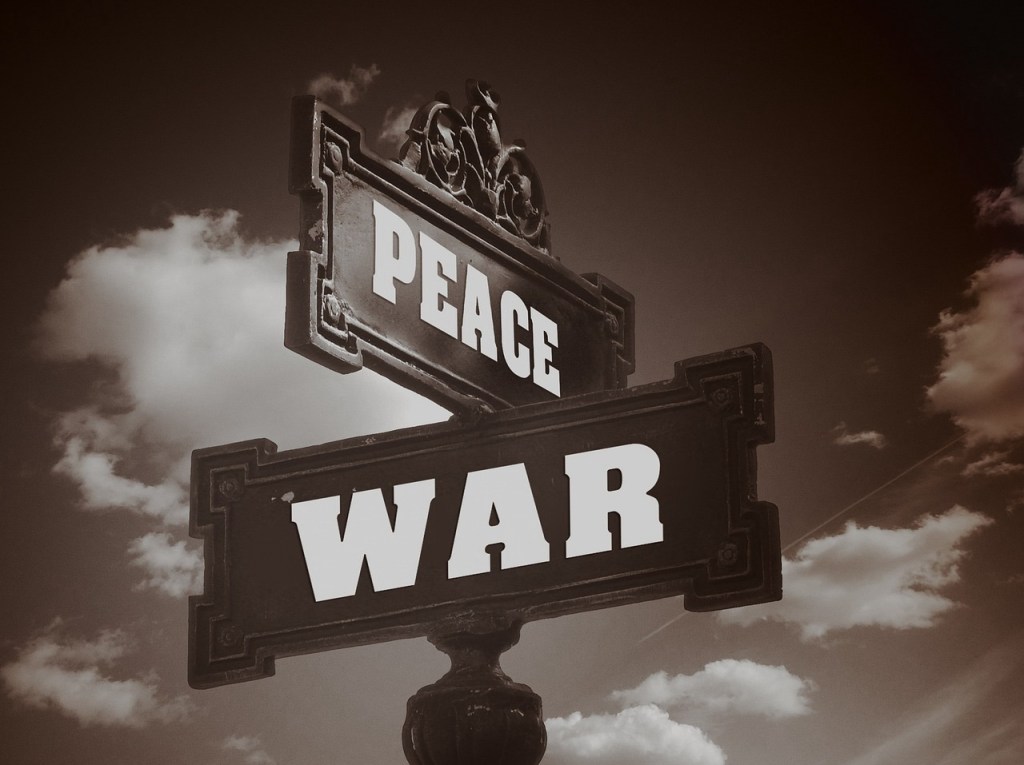
In the annals of human history, the intertwined narratives of peace and war have shaped the trajectory of civilizations, cultures, and human understanding itself. Let’s embarks on an exploration of these two fundamental aspects of human experience, tracing their evolution from the primitive instincts of our ancestors to the complex geopolitical landscapes of the modern world.
Our journey begins with an examination of the transformation of simple emotions of care and hatred into the sophisticated constructs of peace and war. By understanding this transformation, we gain insights into not only our past but also the possibilities that lie ahead.
As we delve into this exploration, we aim to understand how human cognitive development, influenced by societal, technological, and ideological advancements, has dramatically altered our engagement in and perception of peace and war. The story of this evolution is not just a reflection of our history; it also sheds light on the potential paths that lie before us, in our continual quest for harmony and understanding in a world often torn by conflict.
The Primitive Roots
In the dawn of human existence, the emotions of care and aggression were not philosophical concepts but essential tools for survival. Our early ancestors, much like animals, relied on these primal instincts to navigate the harsh realities of their environment. Care within the group fostered unity and collaboration necessary for hunting, gathering, and protecting one another. Conversely, aggression was often a response to external threats, crucial for defending resources, territory, and the group’s survival.
As early human societies formed, these basic emotions began to manifest in more structured ways. The care for one’s tribe or clan evolved into a sense of communal responsibility and solidarity, while aggression towards outsiders cemented group identity and territorial integrity. This dichotomy laid the groundwork for the earliest forms of both peace and conflict, as alliances and rivalries among groups were formed based on mutual interests and survival needs.
Kinship and group dynamics played a pivotal role in shaping these early interactions. Loyalty to one’s group was paramount, and acts of care were often reserved for those within the group. Outside of this circle, mistrust and hostility were common, setting the stage for intergroup conflicts that were precursors to organized warfare.
In this era, peace and war were simple, direct expressions of care and aggression. They were not laden with the complex moral and ethical considerations that would come later. Instead, they were straightforward responses to immediate needs and threats, deeply rooted in the instinctual drive for survival and reproduction.
The Cognitive Revolution
The cognitive revolution marks a pivotal moment in human history. With the development of complex language and abstract thought, humans began to transcend the limitations of their primitive instincts. This leap in cognitive abilities enabled not only the communication of concrete ideas but also the expression and manipulation of abstract concepts like power, justice, and morality.
This cognitive leap had profound implications for how early humans perceived and engaged in acts of care and aggression. These emotions began to evolve beyond immediate survival responses. Communities started to organize around shared beliefs and values, leading to the formation of more complex social structures. War, once a matter of direct survival, became a tool for achieving broader objectives, including territorial expansion, resource acquisition, and the imposition of belief systems.
With these advanced cognitive abilities, humans began to conceptualize peace and war in more sophisticated terms. War was no longer just a fight for survival; it became an organized endeavor with strategies, rules, and objectives. Similarly, peace transcended mere absence of conflict; it became associated with harmony, cooperation, and coexistence based on shared principles and agreements.
Language played a critical role in this transformation. It allowed for the dissemination of complex ideas and the rallying of large groups around common causes. Cultures and ideologies emerged, each with its own understanding of what constitutes peace and justifies war. These developments set the stage for the intricate tapestry of conflicts and alliances that would characterize human history henceforth.
In this new era, peace and war were no longer just instinctual reactions but rather outcomes of deliberate thought, cultural influences, and organized societal efforts. This cognitive revolution thus paved the way for the intricate and often convoluted dynamics of peace and war that we see in human societies today.
The Role of Civilizations
As human societies evolved into civilizations, the dynamics of peace and war underwent further transformations. The rise of cities, states, and empires brought new levels of complexity to human interactions. These civilizations were not just larger and more organized; they were also more diverse in their cultural, ideological, and political structures.
The governance systems that emerged, ranging from monarchies to early democratic structures, had a significant impact on how war was waged and peace was maintained. Leaders and ruling classes often used war as a means to consolidate power, expand territories, or control resources. Peace, in turn, was used as a period for internal development, trade, and diplomacy.
Religions and ideologies played a crucial role in shaping the perceptions and practices of war and peace. Many religions introduced concepts of just war and pacifism, influencing both the reasons for going to war and the methods of conducting it. Similarly, peace was often framed within the context of religious or ideological visions of harmony and order.
The development of new technologies, from the invention of the chariot to the construction of fortified cities, drastically changed the nature of warfare. These technological advancements made wars more deadly and complex. Conversely, the same ingenuity was applied to peacekeeping, with innovations in communication, transportation, and governance improving the management and resolution of conflicts.
In these civilizations, war and peace became more than survival strategies; they were instruments of statecraft, expressions of cultural and religious values, and means of societal evolution. The legacy of these civilizations, with their sophisticated concepts of war and peace, continues to influence our modern world.
The Paradox of Peace and War
The relationship between peace and war is often paradoxical. While peace is the desired state for most societies, the pursuit of peace can, ironically, lead to war. Similarly, the horrors of war frequently remind humanity of the necessity for peace.
In times of peace, societies may become complacent, weakening their defenses or failing to address underlying tensions and injustices. This can create opportunities for conflict, as other groups or nations might exploit these weaknesses or unresolved issues. Additionally, ideological extremism can flourish in peaceful times, leading to conflicts driven by the desire to impose certain beliefs or systems on others.
Conversely, the devastation caused by war often leads to a strong desire for peace. The end of major conflicts typically sees efforts to establish lasting peace through treaties, alliances, and international organizations. The shared experience of suffering can lead to a mutual understanding and a stronger commitment to avoiding future conflicts.
The human tendency to align strongly with one’s own group (national, religious, ideological) often turns the desire for internal peace into aggression against external “others.” Leaders and governments can exploit this dynamic, framing wars as necessary for defending or achieving peace. The narrative of fighting for a “just” or “righteous” cause is a common theme throughout history.
Instances like the rise of extremist ideologies in post-World War I Germany, the Cold War dynamics post-World War II, and various religious conflicts illustrate this paradox. In each case, the pursuit of a particular vision of peace led to significant conflicts.
This paradox highlights the complex nature of human societies and the intricate relationship between peace and war. It underscores the need for a continuous, proactive effort to understand and address the underlying causes of conflict to maintain peace.
The Evolution of Warfare
The nature of warfare has evolved significantly from its origins in survival and resource competition. As societies and states developed, wars began to reflect more complex motivations: territorial expansion, power struggles, religious and ideological conflicts, and even the egos of leaders.
Technological innovations have dramatically changed the way wars are fought. From the invention of gunpowder to the development of nuclear weapons, each technological leap has increased the destructive potential of warfare. In recent times, advancements in cyber warfare and autonomous weapons systems have opened new frontiers in how wars are conducted.
Modern warfare is not just about battles on the field. It now encompasses a range of activities including economic sanctions, cyber-attacks, and information warfare. Conflicts have become more complex, involving a mix of state and non-state actors, with blurred lines between combatants and civilians.
The evolution of warfare has had profound impacts on societies. It has led to significant loss of life, displacement of people, and long-lasting trauma. Ethical considerations in warfare, such as the rules of engagement and the treatment of prisoners and civilians, have become increasingly complex and vital.
In response to the changing nature of warfare, international law and treaties have evolved to regulate conflict, protect human rights, and prevent the use of particularly inhumane or destructive weapons. Organizations like the United Nations play a crucial role in this aspect.
The evolution of warfare reflects the intersection of technological progress, political power, and human ethics. It highlights the continuous challenge of maintaining peace and security in a world where the means and methods of conflict are constantly changing.
The Development of Peace Concepts
The concept of peace has evolved significantly throughout human history. Initially, peace was often seen merely as the absence of conflict. Over time, however, it has come to embody a broader set of values, including justice, cooperation, and mutual respect among communities and nations.
The development of diplomacy and international law has been central to this evolution. Diplomacy has transformed from a tool for negotiating treaties and alliances to a complex process of managing international relations and preventing conflicts. International law, including treaties and conventions, has set standards for the conduct of nations, promoting peace through legal frameworks.
The establishment of global institutions like the United Nations and various non-governmental organizations has marked a significant advancement in peacekeeping efforts. These organizations work towards conflict resolution, humanitarian aid, and the promotion of human rights, often acting as mediators in international disputes.
Historically, grassroots movements and influential figures have played a vital role in promoting peace. From the anti-war protests during the Vietnam War to the global advocacy for nuclear disarmament, these movements have shaped public opinion and policy. Cultural shifts towards greater global awareness and interconnectedness have also facilitated a broader understanding of peace, emphasizing its importance for the future of humanity.
Despite these advancements, maintaining peace remains a complex challenge, often hindered by political, economic, and ideological conflicts. The future development of peace concepts may involve deeper integration of global governance, increased emphasis on sustainable development, and a continued focus on human rights and equality.
The development of peace concepts illustrates humanity’s growing recognition of the interconnectedness and interdependence of global communities. It reflects an ongoing journey towards a world where peace is not just the absence of war, but a dynamic and positive state of human coexistence.
The Future of Peace and War
Imagine a future where our sense of global interconnectedness transcends all existing boundaries. In this world, empathy and understanding are not confined by national, cultural, or ideological lines. The advancements in technology have enabled not just unparalleled communication networks, but also shared virtual environments, fostering a deep sense of global community and shared destiny.
Imagine proactive peacekeeping efforts that are sophisticated and preemptive. Data analytics and predictive models are not just tools for business or weather forecasts but are integral to anticipating and mitigating conflicts. In this future, international organizations and governments work in unison, harnessing technology to prevent conflicts before they even begin, marking a shift from reactive to proactive global peacekeeping.
However, this future also holds potential for new forms of conflict, more complex and challenging than ever before. Warfare has evolved, now dominated by advanced technologies such as artificial intelligence and autonomous weaponry. These technologies bring about ethical dilemmas and challenges that we are only beginning to understand.
Cyber warfare becomes a norm, with nations capable of crippling each other’s critical infrastructure without a single physical weapon being fired. The battlefields are not just physical territories but also the realms of digital information and public perception. Psychological warfare, aided by advanced media technologies, can manipulate populations, swaying public opinion and political decisions.
In this future, the ethical implications of warfare and peacekeeping technologies are at the forefront of global discourse. Questions of autonomy, privacy, and human dignity in the age of AI and cyber capabilities are debated vigorously in international forums. The potential for catastrophic destruction, especially with autonomous weapons and cyber warfare, necessitates a reimagining of international laws and cooperation.
This future landscape is a testament to human ingenuity but also a reminder of our immense responsibility. Our choices and actions become crucial in shaping a world where advanced technologies are harnessed for the greater good. The lessons of history serve as a guide, reminding us of the devastating consequences of unbridled conflict and the transformative power of genuine cooperation.
Global cooperation is no longer a lofty ideal but an essential reality. The future of peace and war hinges on our collective ability to see beyond individual or nationalistic agendas and embrace a unified approach to the challenges facing humanity.
In this envisioned future, peace and war exist in a delicate balance, constantly evolving with our technological and social advancements. It’s a world that holds both daunting challenges and boundless opportunities, reflecting the complexity and potential of the human journey.
Embracing the Future with Hope and Vigilance
As we stand at the crossroads of history and future, our journey through the evolving landscapes of peace and war offers both a reflection of our past and a glimpse into our potential destiny. This exploration, rich in lessons and insights, is not merely an academic exercise but a beacon guiding us towards a future that we can shape with intention and wisdom.
In this future, we envision a world where the concept of peace is not static or complacent but dynamic and proactive. A world where peace is nurtured not just in the absence of war, but in the everyday actions of individuals and the policies of nations. It is a peace that is inclusive, recognizing the interconnectedness of all life and the importance of sustaining both our planet and our humanity.
However, this vision of peace does not negate the realities of war. The potential for conflict, heightened by technological advancements and complex global dynamics, remains a stark reminder of the fragility of peace. The future may hold forms of conflict that are currently beyond our understanding, challenging us to continually adapt and respond with both innovation and ethical consideration.
Thus, our journey forward requires a balance of hope and vigilance. Hope, that our collective efforts towards understanding, empathy, and cooperation will lead to a more peaceful world. Vigilance, in recognizing the signs of emerging conflicts and addressing them with the wisdom gleaned from our past.
As we embrace this future, let us do so with the knowledge that each of us plays a role in shaping it. The decisions we make, the values we uphold, and the actions we take collectively weave the tapestry of our shared future. It is a future that calls for leaders and citizens alike to champion the cause of peace, to engage in thoughtful dialogue, and to act with a sense of global responsibility.
Let this exploration of peace and war not be an end but a continuing conversation, one that inspires and motivates us to build a world where the cycles of conflict give way to a lasting and meaningful peace. A peace that is not just a dream, but a tangible, achievable reality for generations to come.
Image by Gerd Altmann
 Tom’s Blog