
The philosophical inquiry into the nature of consciousness has perennially stood at the crossroads of the empirical and the metaphysical, the material and the ideal. From the ancient dialogues of Plato, through the empirical assertions of Aristotle, to the provocative gestures of Diogenes the Cynic, consciousness has been as elusive as it has been central to understanding human existence. Let’s delve into the divergent views on consciousness as portrayed by the materialist perspective—looking at consciousness as an emergent property of neural complexity—and the idealist perspective—viewing consciousness as a fundamental aspect of the universe, potentially uniting with a universal consciousness upon death.
The materialist view contends that consciousness arises from physical processes within the brain, a stance that resonates with the mechanistic outlook of modern science. According to this view, consciousness is an emergent phenomenon; that is, it emerges from the intricate and highly organized network of neural activities. The implications of such a stance are profound when it comes to artificial intelligence (AI). If consciousness can indeed be distilled to complex information processing, then, theoretically, a machine equipped with advanced AI could mimic, or even surpass, human consciousness—a notion that culminates in the concept of the Technological Singularity.
However, the materialist perspective faces the “Hard Problem of Consciousness,” as termed by philosopher David Chalmers. It grapples with the challenge of explaining the subjective quality of experience, or qualia, that emerges from objective neural processes. The explanation gap here is substantial and persistent; despite the leaps in neuroscience, a comprehensive explanation of how subjective experience arises from brain activity remains elusive.
The materialist perspective also intersects with human attitudes toward death and the existential angst associated with it. If consciousness is but a byproduct of the brain’s function, then it follows that with the brain’s cessation at death, consciousness too dissolves. In an attempt to overcome this daunting finality, some materialists have turned to the concept of mind uploading—the hypothetical process of transferring a person’s consciousness into a digital medium. This concept tantalizingly promises a form of immortality, as the essence of one’s consciousness could, in theory, continue indefinitely, free from the frailties of the biological form.
Yet, mind uploading raises numerous philosophical and ethical dilemmas. There is the question of identity and continuity: would the uploaded consciousness truly remain the ‘self’ that once inhabited a body? Then, there is the feasibility of such an endeavor; can consciousness be separated from the substrate of the brain? And not least, the ethical quandaries: what rights would an uploaded consciousness have, and what would its existence mean for the nature of human society?
Contrasting starkly with materialism is the idealist perspective, which posits that consciousness, rather than emerging from the brain, exists independently of it and is perhaps more fundamental than the physical world itself. This line of thought has historical antecedents in the Platonic Theory of Forms and extends into various religious and spiritual beliefs. Here, consciousness is seen not merely as an interaction of neurons but as an intrinsic aspect of the universe, or as part of a divine cosmic consciousness.
For many, the idealist perspective offers comfort in the face of death. The belief that consciousness persists beyond the physical life, whether it returns to a universal consciousness, transitions into an afterlife, or undergoes reincarnation, provides a sense of continuity and meaning that transcends mortal limits. These beliefs offer not only personal comfort but also serve as a moral compass, guiding individuals through life with the promise of transcendence in death. Moreover, spiritual beliefs are often embedded within community practices, offering social support and a collective framework for understanding life’s ultimate journey.
Yet, the idealist perspective also faces scrutiny. The primary criticism lies in the lack of empirical evidence. Beliefs about an afterlife or universal consciousness are, by nature, metaphysical and thus beyond the scope of scientific verification. Moreover, the sheer diversity of religious and spiritual beliefs about what happens after death suggests a degree of subjectivity and cultural influence that complicates any universal claims.
As humans grapple with the nature of consciousness and the inevitability of death, the dichotomy between materialism and idealism presents two distinct pathways. Each path offers its own consolations and raises its own questions, reflecting the deep complexity and individuality of the human experience.
Materialists might put their faith in the progress of science and technology to eventually overcome the limitations of the human condition, potentially achieving a kind of immortality through technology. Idealists, on the other hand, may find solace in the belief that there is more to existence than the material plane, that death is but a doorway to a broader, perhaps more profound, realm of consciousness.
What unites these divergent views is the underlying drive to understand our place in the cosmos and to find meaning in the face of life’s ultimate horizon. Whether through the lens of neuroscience and AI or through the diverse traditions of spiritual belief, humans demonstrate an enduring quest to transcend the constraints of mortal existence and to grasp the essence of consciousness itself.
The philosophical journey from the allegorical shadows of Plato’s cave to the digital landscapes envisioned by proponents of mind uploading demonstrates humanity’s enduring quest to decode the enigma of consciousness. As we venture forth, the debates between materialism and idealism continue to illuminate the human condition, challenging us to explore the depth and breadth of what it means to be conscious beings in a universe rich with mystery.
This quest, woven into the fabric of human culture, underscores our resilience and imagination. It reflects a fundamental desire not only to understand the nature of consciousness but also to find a path through the shadow of death, toward the possibility of immortality, whether through the circuits of a machine or the ineffable expanse of the spiritual domain. Thus, as we confront the twilight of existence, we find that the conversation about consciousness and immortality is far from its terminus—it is an evolving narrative that continues to shape our understanding of life, death, and the possible futures that await beyond the veil.
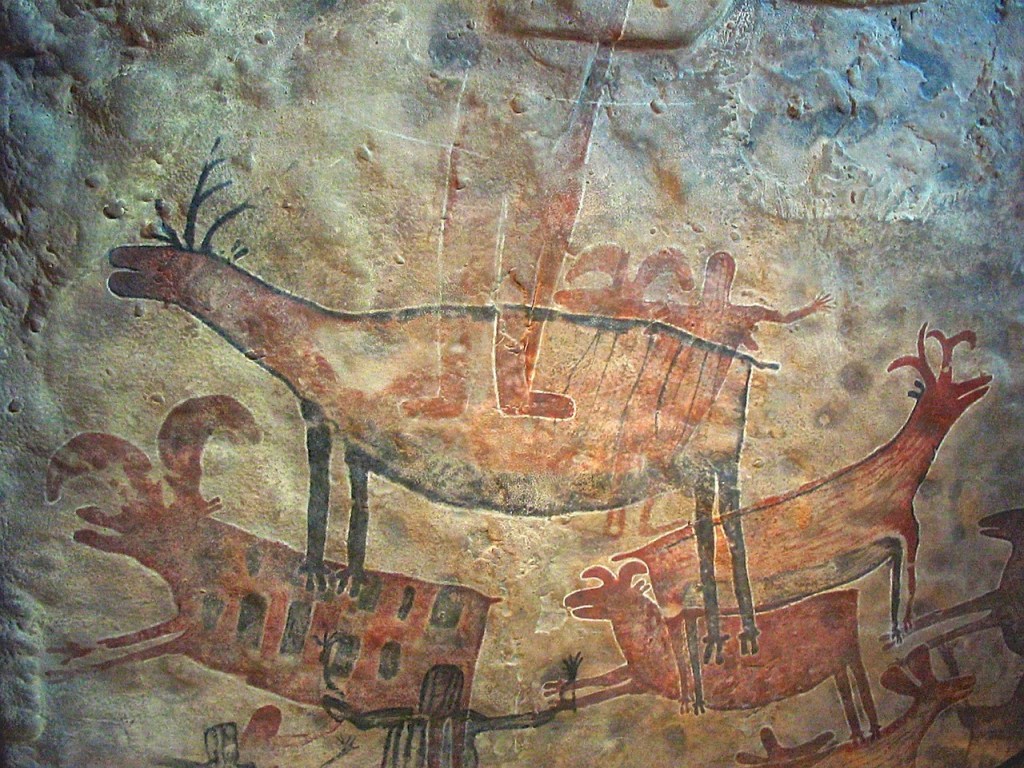
Image by Rodrigo de la torre
 Tom’s Blog