
Before your birth, the world existed. While you live, the world obviously continues to exist. After your death, the world will surely persist. Few would disagree with this statement.
However, the challenge lies in the fact that you can never perceive or experience the world before your birth or after your death, as you don’t exist in either of those times. We believe in the continuity of the world regardless of our personal experiences, but this belief is based on observations and assumptions from other cases.
Looking at old albums, you can see photos of your parents’ and grandparents’ childhoods. While you never experienced their spacetime, these images allow you to infer that the world existed before you were born. It’s not just these old albums; various historical records also support this assumption.
And what about the future, after your death? By the same logic, even though there aren’t any albums yet, you can imagine that your children will grow up and experience a world without you. Historical records suggest that the world will likely continue as it always has. We have no reason to doubt this.
There’s no doubt about both our past and future. However, the challenge is that we can’t perceive and experience them firsthand in any different way. Our understanding of them is merely based on logical and experiential reasoning.
This challenge isn’t limited to just the past and future; we face the same issue in the present as well.
For instance, the world I perceive and experience right now undoubtedly exists. But in the end, I can’t get beyond my own perception and experience. As I sit in this coffee shop writing this piece, there are other customers: some are reading books, others are chatting. But I can’t ever truly understand or feel the world from their viewpoint.
This isn’t just about the strangers around me, but everyone – my friends, relatives, family members, and so on. No matter how much I know about their worlds, I can never truly experience them. We often assume that others must see the world similarly to how we do. Although there might be variations in perspectives, the world I see is likely similar to the one they see.
Why do we make such an assumption? The foundation for this belief is the idea that all beings in an environment perceive and experience it in some way or another.
My dog, sitting beside me, seems to have a world in her eyes. I might believe that the world she sees is the same as the one I observe, but her perception may differ due to our unique perspectives. The same goes for anyone else. Near the table where I sit, there’s a small ant. The world it perceives is likely vastly different from both mine and my dog’s, due to our individual perceptual lenses. Yet, I can infer that we all — the ant, the dog, and I — exist within this same world, even if we experience it in diverse ways. This holds true for everyone.
This belief stems from the assumed model that all entities within an environment have their own way of perceiving and experiencing it.
Yet, to adopt a more rigorous stance, the only undeniable truth is the fact that I hold such beliefs. Beyond that, everything is uncertain. I might assume others experience the world similarly to me, but that’s just my presumption. I cannot directly access their experiences, and presumably, neither can they access mine.
In the end, the only certainty in my experience is my own perception. Everything else is mere assumption. This line of thought echoes Descartes’ Cogito, ergo sum. After meticulously discarding all elements of doubt, including the belief that others live and experience the world, what remains is one’s own inherent existence and experience: “I think, therefore I am.”
Certainly, you can say you perceive and experience the world around you. This self-consciousness is perhaps the only evidence that you exist in the world you perceive. But what about everyone and everything else? It’s all based on assumptions.
I likely exist here and now because I perceive and experience this world. Beyond my death, and even before my birth, I can’t assure anything except for the present moment I am in. How vulnerable I am!
Is there a way to break free from this confinement? Perhaps we could dismantle the very model that assumes all subjects in the environment perceive and experience it in some way.
Our consciousness isn’t an isolated entity, even if it often feels like it. As John Donne eloquently wrote, “No man is an island.”
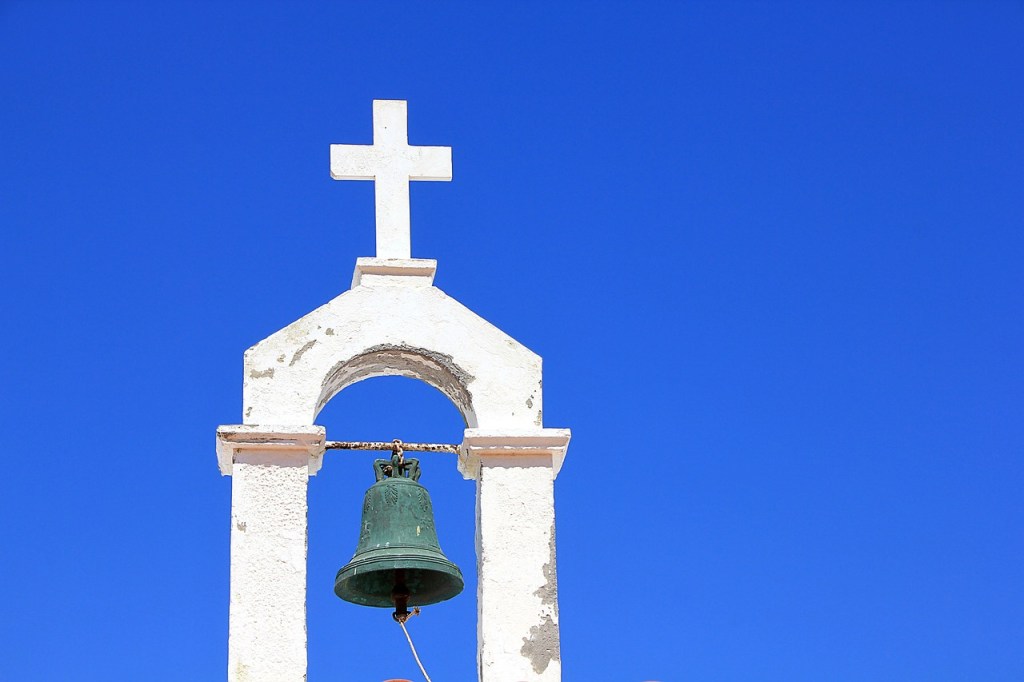
No man is an island, entire of itself; every man is a piece of the continent, a part of the main; if a clod be washed away by the sea, Europe is the less, as well as if a promontory were, as well as any manner of thy friends or of thine own were; any man’s death diminishes me, because I am involved in mankind. And therefore never send to know for whom the bell tolls; it tolls for thee.
Zhuang Zhou’s “Butterfly Dream” offers another perspective. This classic tale describes a dream in which a butterfly flits joyfully from one flower to another.
Suddenly, Zhuang Zhou woke up and found himself unmistakably as Zhuang Zhou. But he was left wondering: was he Zhuang Zhou who had dreamt of being a butterfly, or a butterfly now dreaming he was Zhuang Zhou?
Whenever I reflect on this story alongside John Donne’s poem, I ponder my own identity. Life is fleeting, lasting perhaps 90 or, if fortunate, 100 years. Will I vanish entirely after death? Was I truly nonexistent before birth? I doubt it. When I let go of self-awareness, I see both the existence and nonexistence of my non-self. My temporality and sense of separation might just be the stuff of dreams. Whose dream? Perhaps God’s. I’m uncertain, but my faith leans toward yes.
In His dream, my consciousness mirrors the butterfly in Zhuang Zhou’s tale and Zhuang Zhou in the butterfly’s dream. We are interconnected, in existence or not. We aren’t islands, but parts of a vast continent — even the ocean that doesn’t wash us away, but binds us beneath. Remember, “for whom the bell tolls; it tolls for thee.”
Image by Greg Montani
 Tom’s Blog