
We often hear the saying: “The truth shall set you free.” It’s a short statement that can be interpreted differently depending on the situation.
The implied meaning is that if we find ourselves captivated by this phrase, it suggests that we haven’t yet discovered what we consider to be the truth. At the same time, we acknowledge that we currently lack freedom.
So, have you found the truth? Are you free from burdens? If you have indeed found the truth, please enlighten me about what it entails and how it has liberated you from your shackles.
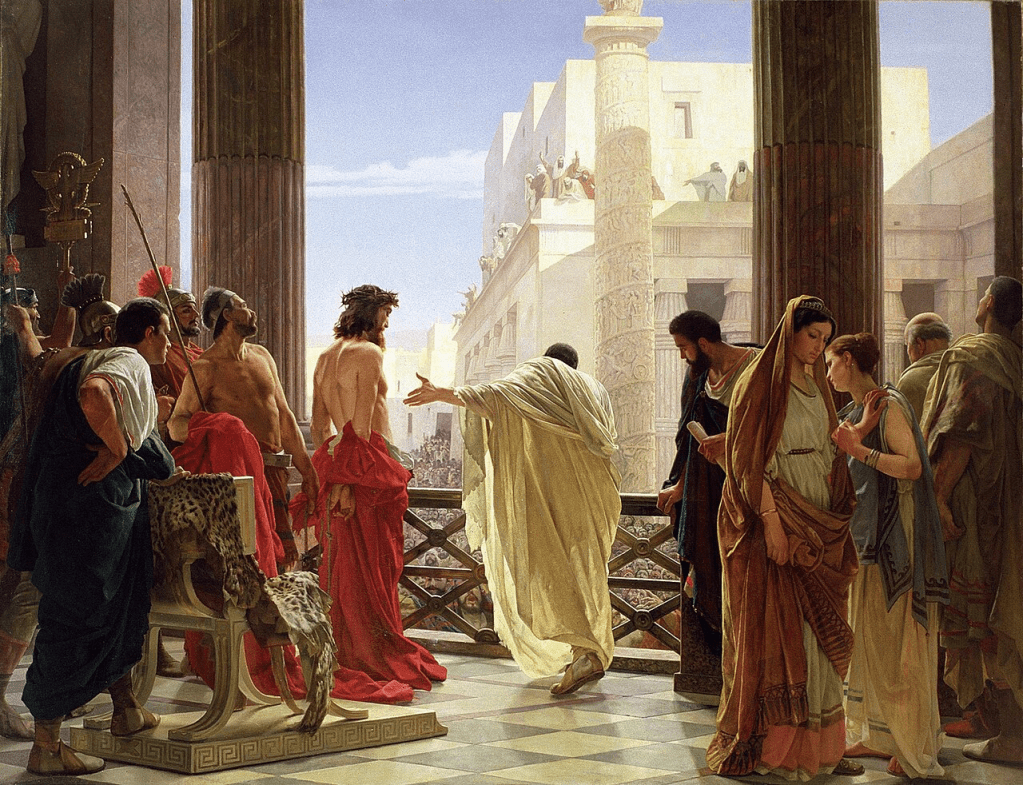
From the Christian tradition, I am reminded of the significant conversation between Pontius Pilate and Jesus Christ. Reluctantly called upon by Jewish leaders, Pilate, the Roman governor, was given the responsibility of passing judgment on Jesus. He began by questioning Jesus, trying to uncover the crimes he was accused of. This powerful encounter is deeply ingrained in the Apostles’ Creed, a testament to its lasting importance.
I believe in Jesus Christ, His only Son, our Lord,who was conceived by the Holy Spirit,born of the Virgin Mary, suffered under Pontius Pilate, was crucified, died, and was buried; He descended to the dead. On the third day, He rose again; He ascended into Heaven, He is seated at the right hand of the Father, and He will come to judge the living and the dead.
From this creed alone, we understand that Jesus Christ faced difficulty under Pontius Pilate. However, when we examine the Bible, we discover that Pilate was hesitant. Initially, he found no evidence of wrongdoing, but due to various pressures and obligations, he avoided taking responsibility for his verdict.
In a contrasting decision, Pilate offered a unique opportunity to release either Jesus or Barabbas. Unfortunately, the Jewish authorities and the people of that time preferred Barabbas, a rebellious figure who challenged the establishment. Barabbas belonged to the earthly realm, unlike Jesus. The leaders were furious, while the people were agitated and angry.
Pilate asked Jesus the following question:
“You know I’m not a Jew!” Pilate said. “Your own people and the chief priests brought you to me. What have you done?” Jesus answered, “My kingdom doesn’t belong to this world. If it did, my followers would have fought to keep me from being handed over to the Jewish leaders. No, my kingdom doesn’t belong to this world.” “So you are a king,” Pilate replied. “You are saying that I am a king,” Jesus told him. “I was born into this world to tell about the truth. And everyone who belongs to the truth knows my voice.” Pilate asked Jesus, “What is truth?” Pilate went back out and said, “I don’t find this man guilty of anything!
John 18:35-38
Jesus straightforwardly told Pilate that his kingdom did not belong to this earthly world. If it did, like Barabbas, people would have vigorously fought for his freedom. However, their intentions leaned towards crucifying him, which proved that although Jesus existed in this world, he remained separate from its ways.
In conclusion, Pilate asked the question:
“What is truth?”
Pilate desired to understand the nature of truth, hoping to find enlightenment through Jesus. He longed to discover the truth that could free his soul.
Despite his wealth and authority as the Roman governor, Pilate felt a lack of true freedom because of the burdensome responsibilities that demanded his accountability. Why was he compelled to order the crucifixion when no guilt had been proven?
He pondered, “What is the truth that can grant me liberation?”
In the same Gospel, we come across a conversation with one of Jesus’ disciples, Thomas, as described in the following verses.
Thomas said, “Lord, we don’t even know where you are going! How can we know the way?” “I am the way, the truth, and the life!” Jesus answered. “Without me, no one can go to the Father. If you had known me, you would have known the Father. But from now on, you do know him, and you have seen him.”
John 14:5-7
The individual soul, detached from this world, represents the path, the truth, and the essence of life. Beyond the illusions of this earthly existence, the true nature of reality is unveiled. Through these clear eyes, we find freedom from our own egos, recognizing that they don’t truly belong to us, but to God. It is a complete acceptance and surrender to God’s will, rooted in faith.
Perhaps, Pilate caught a fleeting glimpse of the truth that could free him from the burdens of the world. Alternatively, he might have realized the extent to which he himself was trapped, and also recognized that those who idolized earthly heroes and rejected heavenly saviors were also imprisoned in their own lack of freedom.
 Tom’s Blog